The Importance of Strong Branding in the Digital Era
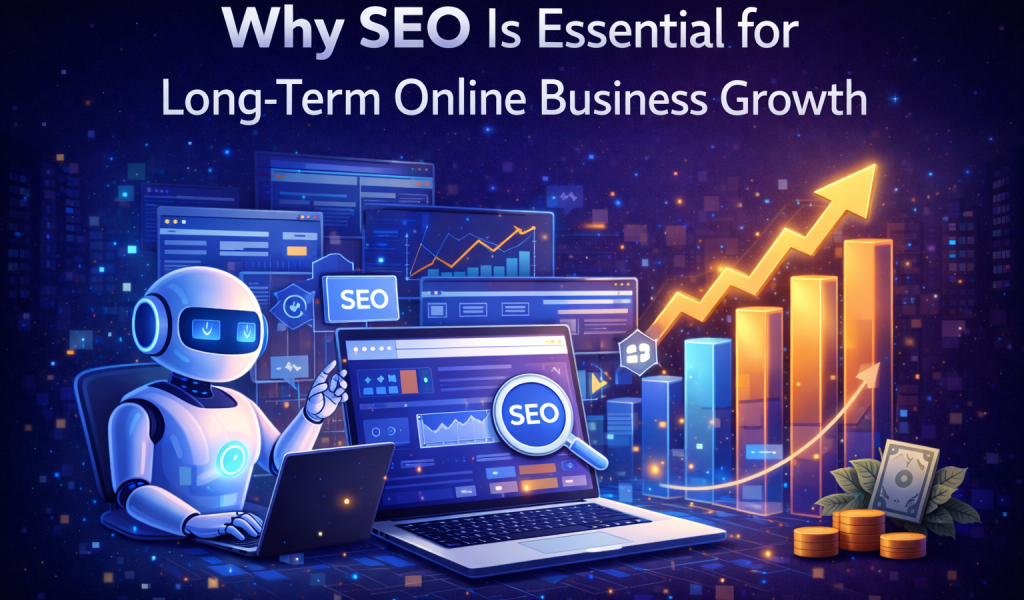
Search engine optimization (SEO) has become one of the most important strategies for businesses operating online. In a world where millions of websites compete for attention, appearing on the first page of search engine results can make a significant difference.
When potential customers search for products or services online, they rarely go beyond the first page of results. This means that businesses with strong SEO strategies have a much higher chance of attracting visitors.
For companies targeting competitive markets such as the UK, USA, and Europe, SEO is a critical tool for achieving sustainable growth.
SEO stands for Search Engine Optimization. It refers to the process of improving a website’s visibility in search engines like Google.
The goal of SEO is to ensure that when people search for relevant keywords, the website appears as high as possible in the search results.
SEO involves several strategies, including:
Each of these elements contributes to improving a website’s ranking.
One of the biggest advantages of SEO is the ability to generate organic traffic.
Organic traffic refers to visitors who find a website through unpaid search results.
Unlike paid advertising, organic traffic does not require continuous spending. Once a website ranks well for important keywords, it can continue to attract visitors for months or even years.
This makes SEO one of the most cost-effective marketing strategies.
Websites that appear at the top of search results are often perceived as more trustworthy.
Users tend to trust search engines, and they assume that top-ranked websites are more reliable and authoritative.
By improving search rankings, businesses can build credibility with their audience.
This trust can lead to higher engagement, more inquiries, and increased sales.
Content plays a central role in SEO success.
Search engines aim to provide users with the most relevant and useful information. Websites that offer high-quality content are more likely to rank well.
Businesses can improve their SEO performance by creating content such as:
This type of content helps answer user questions and provides value to visitors.
Technical SEO ensures that search engines can easily access and understand a website.
Important technical factors include:
These elements help search engines crawl and index pages effectively.
Local SEO is especially important for businesses that serve specific geographic areas.
By optimizing for location-based searches, businesses can attract customers who are searching for services nearby.
For example, someone searching for “digital marketing agency in London” will see results that are optimized for that location.
Local SEO strategies include:
One of the greatest advantages of SEO is its long-term impact.
While paid advertising stops generating traffic once the budget runs out, SEO continues to deliver results over time.
Websites that consistently publish valuable content and maintain strong SEO practices can achieve sustainable traffic growth.
Search engine optimization is one of the most powerful tools for building long-term online success.
By improving search visibility, attracting organic traffic, and building trust with audiences, SEO helps businesses grow sustainably.
Companies that invest in strong SEO strategies will be better positioned to compete in the digital marketplace.

Youngsteck.ai is an AI-powered digital solutions company helping businesses grow through smart technology and innovative strategies. We specialize in web development, digital marketing, SEO, SEM, SMM, and graphic design, combining human expertise with advanced AI tools to deliver faster, smarter, and more effective results.
+44 786 871 1165
support@youngsteck.ai
124 City Road, London, EC1V 2NX
© Copyright 2026 | Youngs Teck | All Rights Reserved.